
HDPE vs Plywood vs Steel
Walk the aisles of any truck accessory retailer, physical or digital, and you'll find no shortage of storage solutions marketed as “heavy-duty”, “weatherproof”, and “built to last.” The packaging is convincing. The photography is great. The price, in many cases, is hard to argue with.
Then you actually use it.
If you treat your truck like a truck — loaded before sunrise, running jobsites in summer heat, pulling out of a muddy trailhead in the dark — you already know how the cheap stuff ends. A dropped cinderblock. A season of UV exposure. One real rainstorm. That's all it takes to find out what something is actually made of, literally and figuratively.
The problem isn't the marketing. It's that marketing has nothing to do with material performance. "Heavy-duty" is an adjective, not a specification. And no amount of aggressive product photography changes what happens when injection-molded plastic meets a sledgehammer or a summer in the Southwest.
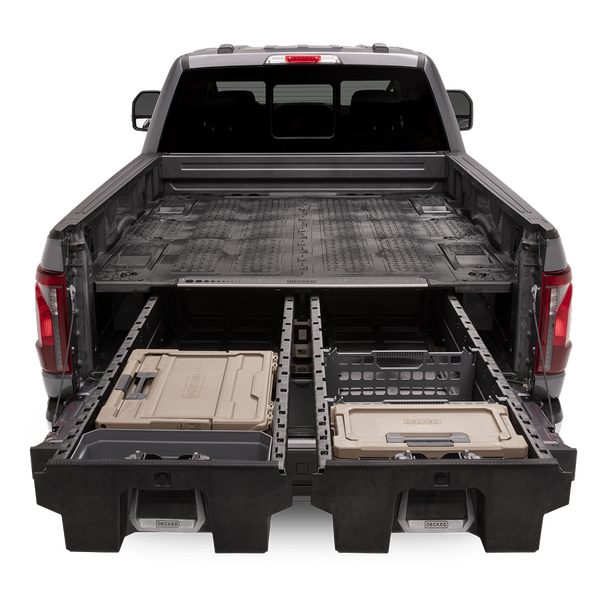
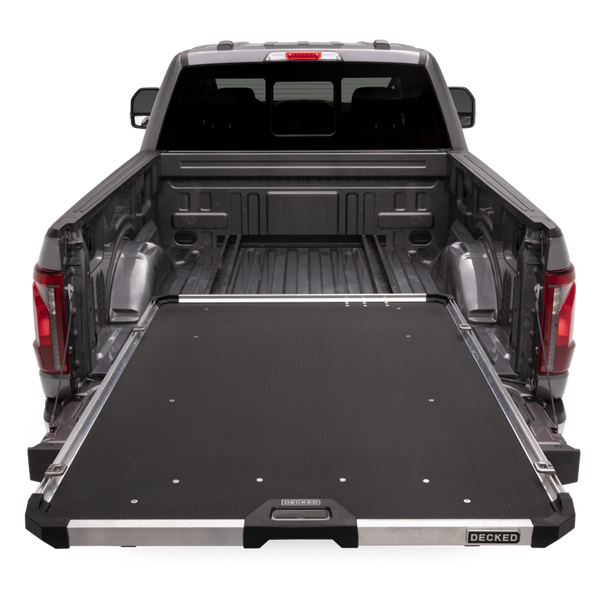
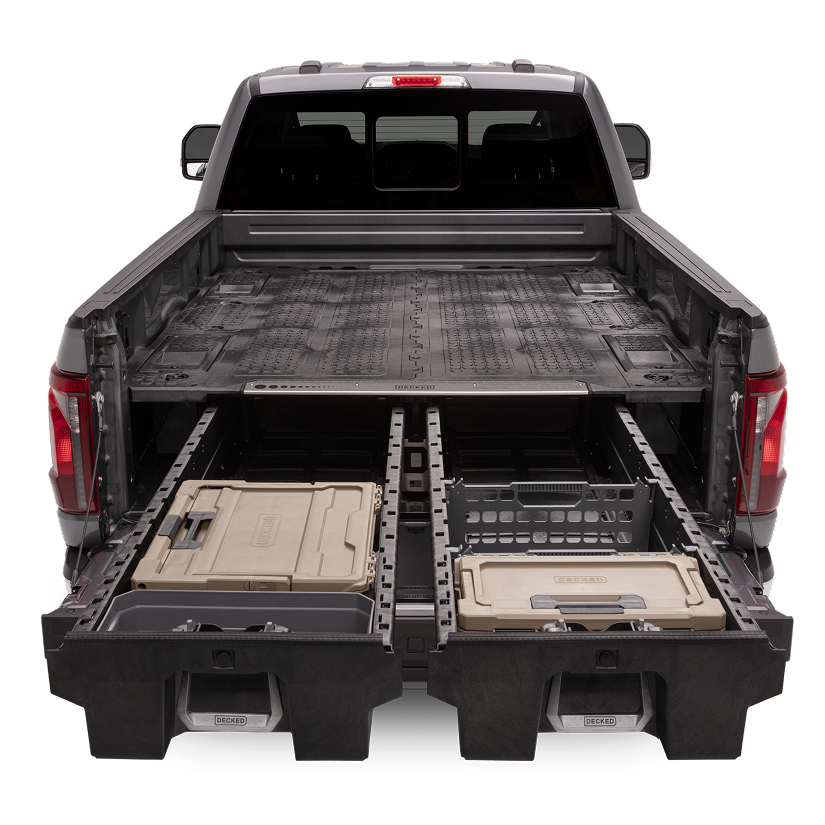
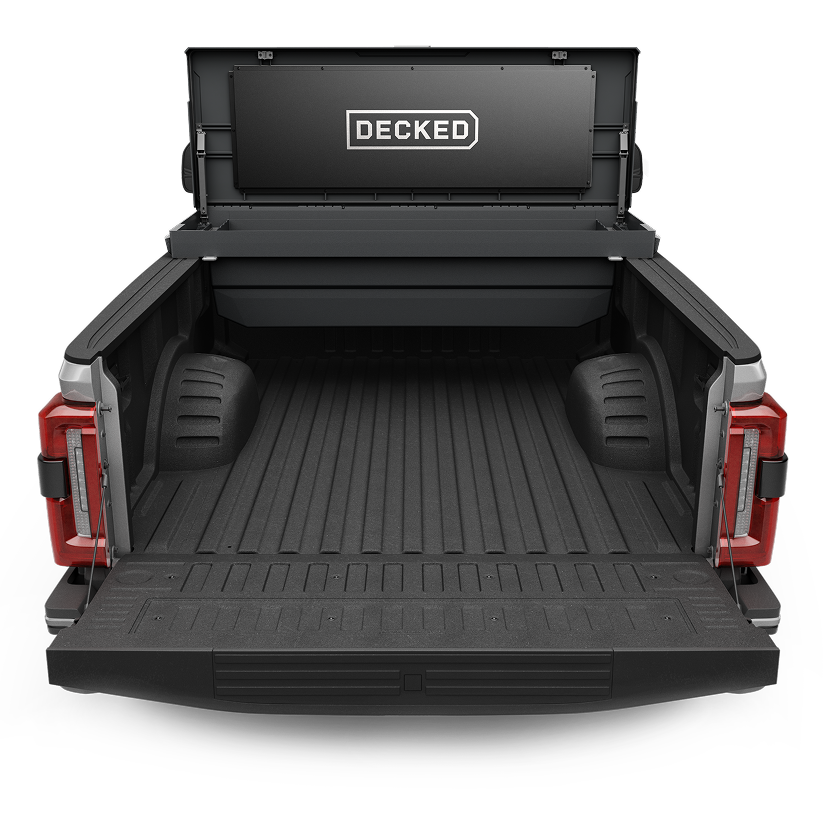
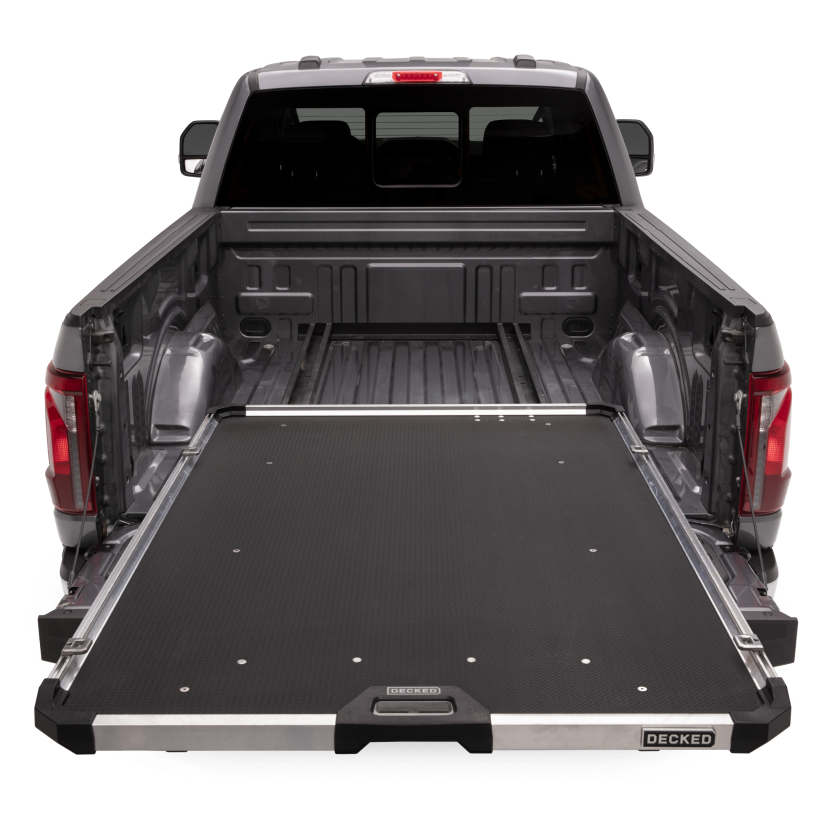
DECKED is built differently. Not as a tagline, but as a materials decision made at the engineering level before a single product hits the assembly line, let alone before the photoshoots. The DECKED Drawer System starts with High-Density Polyethylene co-molded to a structural steel subframe, and every performance claim we make traces back to that foundation. Here's exactly what that means, why it matters, and why it holds up when everything else doesn't.


The Molecular Backbone: Chemistry Beats Buzzwords
Let's geek out. This is where durable, weatherproof truck storage either works or it doesn't: chemistry.
The DECKED Drawer System is built from High-Density Polyethylene (HDPE) co-molded to a steel subframe. Cool. But understanding why it holds up the way it does requires knowing a little bit about what’s going on chemically. So don your lab goggles and closed-toe shoes and let’s get into it:
- Tightly Packed Polymer Chains: Unlike low-density plastics, HDPE's straight linear chains result in stronger intermolecular forces and — the part you care about — a higher strength-to-density ratio. This gives it immense tensile strength and rigidity without being brittle.
- Impact and Stress Crack Resistance: HDPE is highly elastic, absorbing physical impacts and vibrations without permanently deforming or shattering.
- Environmental and UV Resistance: HDPE can be enhanced with UV stabilizers to ensure superior resistance to sun exposure and weathering in outdoor applications. And that’s exactly what we do with the HDPE in our Drawer System.
- High Chemical Resistance: HDPE does not rot, rust, or mold. It’s also highly resistant to most acids, bases, and solvents and is the same material used in plastic gas cans. We’re not saying you should dump a jerry can of gasoline over your Drawer System, but you could.
- Zero Moisture Absorption: Because it’s non-porous, HDPE completely rejects water. It will not swell, crack, or degrade even when submerged. Please don’t drive your truck into the lake to test this.
HDPE is the same material used in heavy-duty industrial pipelines, cutting boards, and protective helmets. This is not decorative plastic. It's an impact-resistant polymer engineered to absorb force and return to shape, known as impact memory to material scientists. It flexes, and it comes back. Cheap alternatives don't have that elasticity — they're brittle. And brittle materials don't warn you before they fail.
The UV stabilization matters just as much as the impact resistance. Standard plastics degrade under prolonged UV exposure: they get brittle, they chalk, they warp at the seams where heat stress concentrates. DECKED's HDPE is chemically treated to resist that degradation, which is why a system that lives its life baking in the bed of a truck doesn't look or perform differently in year five than it did in year one.

The structural steel subframe isn't just there so we can claim “AMERICAN STEEL” (though we love to do that). The steel is what allows the system to hold a 2,000-lb load without transferring that stress directly into the plastic. We’re all familiar with steel, from the knife in your pocket to the frame of your truck. Steel’s tightly-packed, microscopic grains lend it some of the very same properties as the HDPE: impact- and fracture-resistance. Carbon atoms slip into the spaces between the iron, making it difficult for layers of metal lattice to slide past one another and creating the high tensile strength steel is known for.

When it comes to the weather, as everyone knows, steel can leave something to be desired. Raw steel subjected to water and other corrosives like salt (looking at you, Midwest and Northeast) will rust. Left unchecked, full degradation is imminent. This problem can be solved in many ways, but our method of choice is hot-dip galvanization, treating the steel with a thick zinc coating that acts as a sacrificial shield against moisture. Plus, it’s hidden under the top deck and a series of gaskets.
It’s all killer, no filler: two badass materials working together, each doing what it does best.

Plywood & Cheap Plastic: The High Cost of "Saving Money"
We get it. Most folks at DECKED are DIYers at heart and have built their own plywood drawers at some point. So it makes sense to us that you understand your truck, you know what you need, so building your own system feels like the right call. And on day one, a plywood build looks solid. Clean cuts, good fit, exactly what you spec'd.
Under a cap or tonneau, you might be fine for a while. But even so, water finds a way. By day 100, the moisture has moved in. The drawers stick. The finish separates. You start seeing mold. If you're working in wet climates or washing the truck bed regularly, you already know the smell that follows. Without some type of cover, straight up: plywood drawer systems aren't weatherproof, so anything you keep in them is at risk.
The payload math is a harder truth. DIY wood systems are heavy, and that weight counts against your truck's rated payload capacity before you've loaded a single item. DECKED holds 2,000 lbs on the deck while keeping the drawer system itself light enough not to punish your suspension or your payload rating. Moreover, we’ve yet to see a home-grown plywood drawer setup that can even support 2,000 lbs. If some mad scientist out there has created one, it’s safe to bet the system weighs as much as the cargo loaded on top of it.
Listen, We understand the satisfaction of putting things in order with your own two hands. We also understand the frustration when it doesn’t work in the long-run and you’re left to start all over. More time, more money.
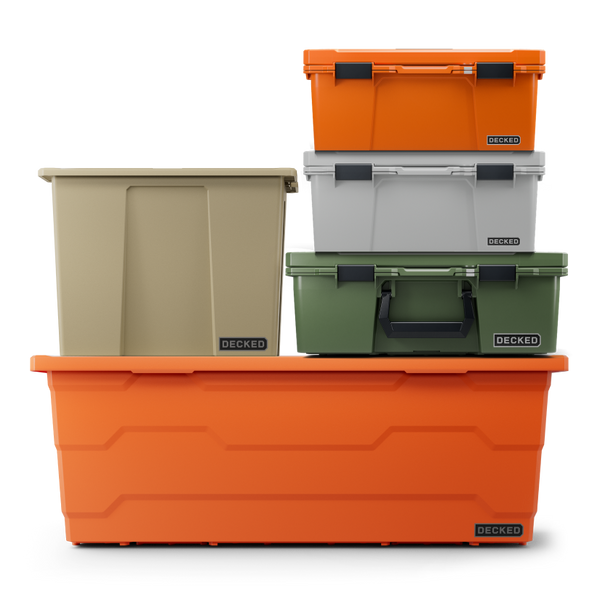
Cheap plastic storage options have a different failure mode: the seals and the plastic itself. They seem fine in the driveway, but put them through the wringer of a dusty two-track, months in the sun, or a rainstorm, and the real story emerges: they aren’t built to last. If they get the job done at first, it never lasts. Lids flex, seals gap, plastic breaks down, and whatever you're attempting to protect inside is exposed. Dust in your power tools. Water on your work gear. Suddenly, you’re right back where you started. Only now, you’re on the hook for another storage option and, possibly, all new tools and gear.
We could go deep down the rabbit-hole of diamond plate and other steel options. If you’re considering those: it’s time to wake up, Alice. You see these everywhere, and we’ll admit that when they’re fresh, they look great. By all appearances, they’re tried-and-true. But in reality, they’re a perishable product. Steel dents. Steel rusts. Finishes chip away. You know how the story ends: back on the web researching your options like you are now.
The DECKED Drawer System doesn’t just tolerate the elements and heavy use — it’s engineered against them from step one. That's a different design philosophy, and it shows up in how the system performs when conditions are less than forgiving.


Proven in the Field, Backed for Life
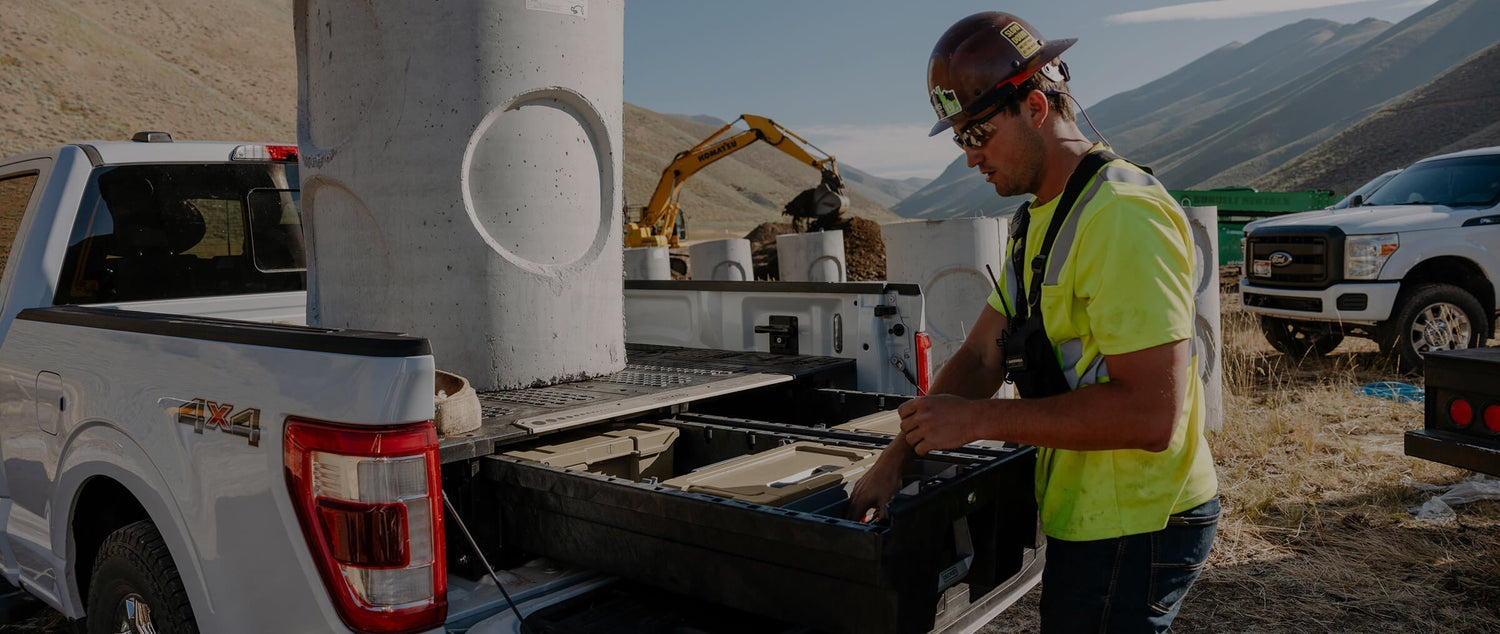
Material science is all foam and no beer if it isn’t tested. Our lab is in the beds of contractors, tradespeople, hunters, anglers, guides, fire-rescue crews, law enforcement, and off-roaders who don't have the option of choosing gear that quits on them. Farmers loading and unloading in the same muddy field every morning. Electricians pulling tools out of a truck that's been parked in a Phoenix parking lot all August. Surfers throwing saltwater-soaked gear in and on their drawers every chance they get. These aren't controlled conditions — they're the conditions real life creates, and the DECKED Drawer System is built to become invisible. Meaning: you don’t think about it, it just works.
That field record is why DECKED can offer what most storage brands can't: our No BS Lifetime Warranty. If it fails, DECKED makes it right. That's not a marketing commitment, it's a materials confidence. The kind you can only make when you know and trust what you built it from.


Heavy Duty. No BS.
You bought your truck to work. Whether that means long days on the jobsite or weekends on the trail, the gear in it should match that standard.
We’re still going to pump your phone and computer full of clever lines and pretty pictures. That’s just the game. The difference between us and them is that we won’t stop there. The DECKED Drawer System is built from materials chosen for performance under real conditions, not for how they photograph on a product page. The HDPE holds up. The steel subframe holds up. The system carries your tools, your gear, and your payload through seasons and jobsites and trails that will eventually expose everything else for what it is.
And because the material science is real, DECKED can back it for life. Don’t hold back: use your truck the way it’s meant to be. Get DECKED. Get after it.