

Cost, weight, and bed height. What you give up, what you get back, and who comes out ahead.
No, we haven’t been hacked.
Yes, we’re here to talk about the downsides of truck drawers. Stay with us.
DECKED isn’t right for every truck owner. We know this. It costs more than a basic toolbox. It adds weight. It takes 12 inches of bed depth. We’re telling you up front because you already know this, or you’d find out anyway. And we’d rather you hear it from us than from the comments section.
Here’s the other half: every one of those trade-offs earns you something specific. Let’s break down what, so you can decide if the math works for your truck and how you use it.


What You’re Paying For.
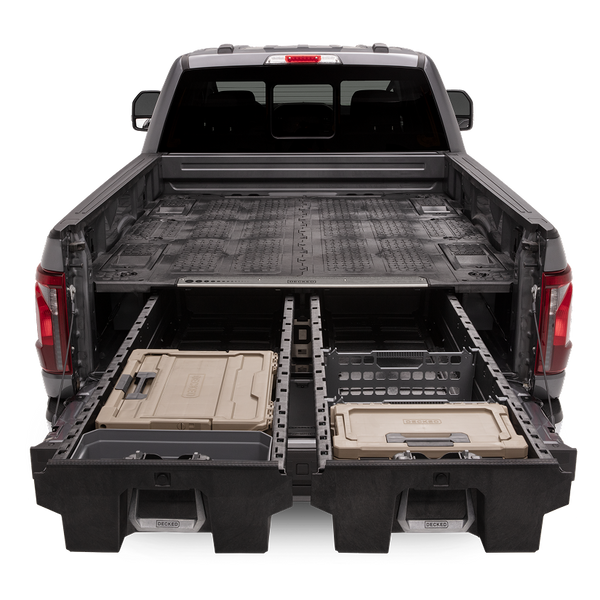
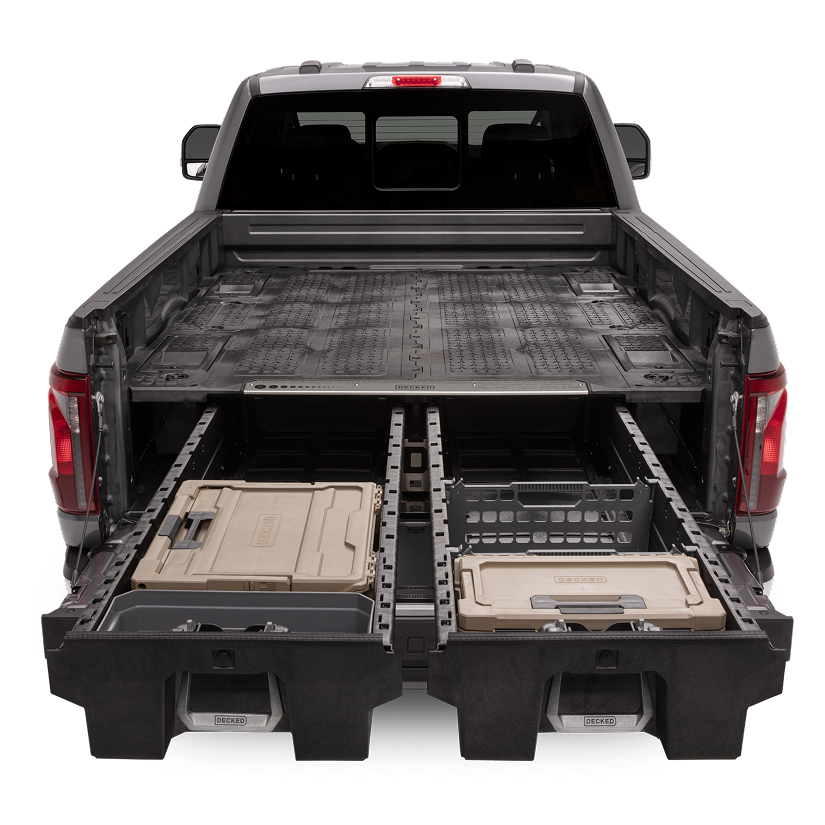
Okay yeah, we’re going to kick this off by extolling the virtues of the Drawer System. So let’s just start with the TL;DR: The Drawer System organizes the whole bed and brings everything to you. Open a drawer, grab, go.
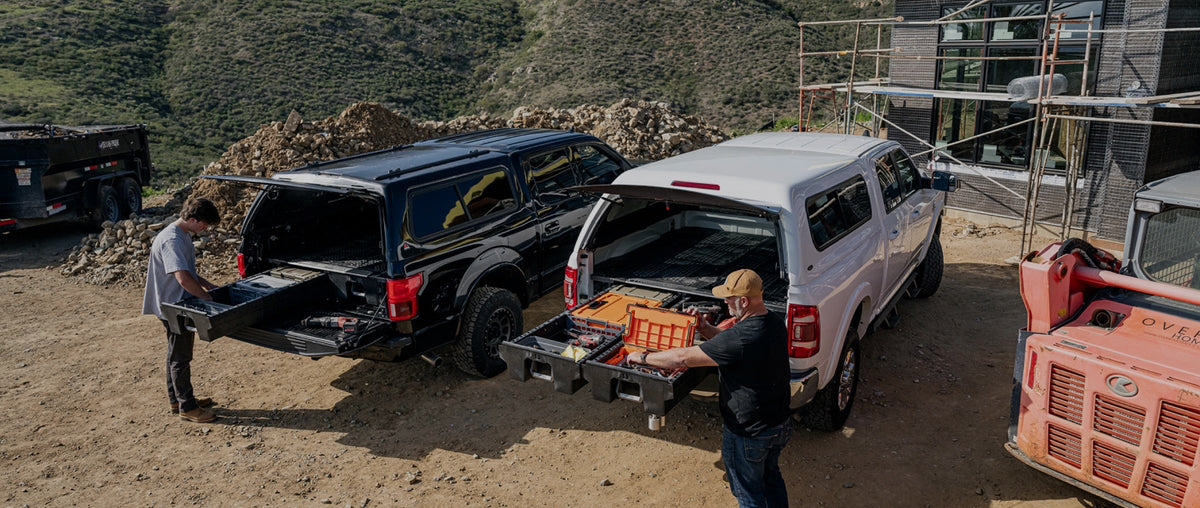
Two full-length drawers, weatherproof and secure, keep your gear dry and out of the hands of the kleptomaniacally inclined — without constantly moving things into and out of the back seat. The drawer pull is so smooth you really need to try it to believe it. (You’ll wanna check the Dealer Locator to get hands-on.) Everything glides right out to you. No gearing up to summit the tailgate (on oxygen if your rig is lifted), no tire-climb perch-and-rummage while your buddies stand around pretending not to check their watches.
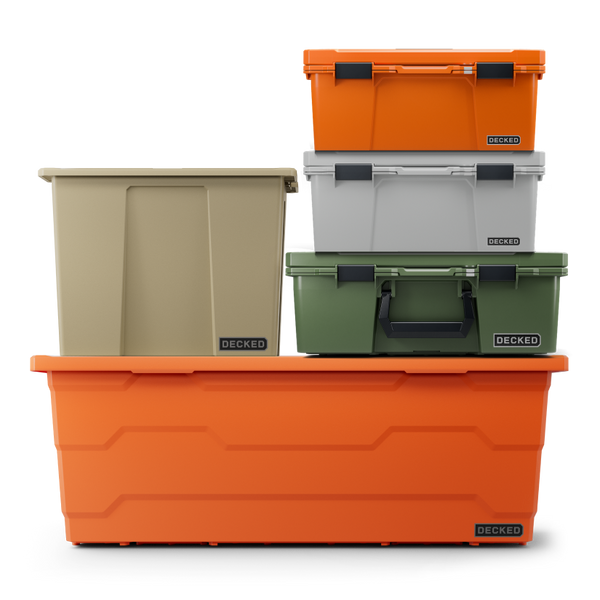
Cases and Payloader Bins, preloaded and sorted by task or activity, make switching gears from the workweek to weekend faster than you can say, “Quittin’ time.” Dial it in with Drawer Dividers, Drawerganizers, and Stash Bins, and you can rest assured that you really have bought that socket for the seventh and final time.
Then there’s the top deck. It’s router-cut to your exact truck and extends over the wheel wells, which means more usable surface than your stock bed floor. (Your bed floor just stops there, like it hit the end of its shift.) It holds 2,000 lbs on top (1,000 for midsize trucks) and adds tie-down locations, so you’re securing loads instead of weaving a web out of ratchet straps with crossed fingers.
And hey, if that doesn’t take you across the finish line, we have some solid financing options if the upfront number is the sticking point.


Size Matters.
Weight: Calculating Your Payload Impact.
A truck Drawer System weighs between 164 and 283 lbs — from the smallest midsize truck up to the 8-foot full-size truck with the Load Floor option. (SUV Systems are lighter, of course.) It’s engineered to be light, but still burly enough to carry all your equipment and materials on top.
To see how that affects your truck, find the payload sticker on your driver-side door jamb. (Yes, the one nobody’s read since the dealership.) Go to the Drawer System product page, select your vehicle, and click on “Tech Specs.” You’ll find the Drawer System weight for your specific truck. Subtract that number from your truck’s payload. (Or just subtract 200 lbs if you wanna ballpark it.) That’s your number. If you already run at your payload limit, you’ll feel it. If you don’t, you won’t.
Height: Navigating the 12-inch Clearance Loss.
You give up 12 inches of vertical bed space.
Gravel and mulch ride higher, so you fill less volume. Lumber, plywood, and your table saw need more attention when you lash them down. Heavy cargo gets lifted a foot higher, which raises your center of gravity and serves as a strong argument for a second set of hands — or for finally putting in the work on your clean-and-press. And yes, the couch sits up tall on moving day, like it’s got something to prove. Planning to strap a motorcycle on top and hit the Taco Bell drive-thru? Scout the clearance first.
It’s all doable. It’s just real, and you should know going in.


Drawers vs. Tool Box.
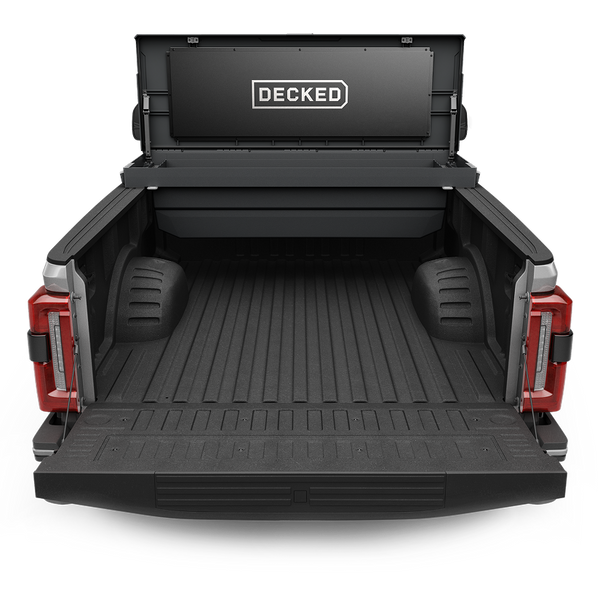
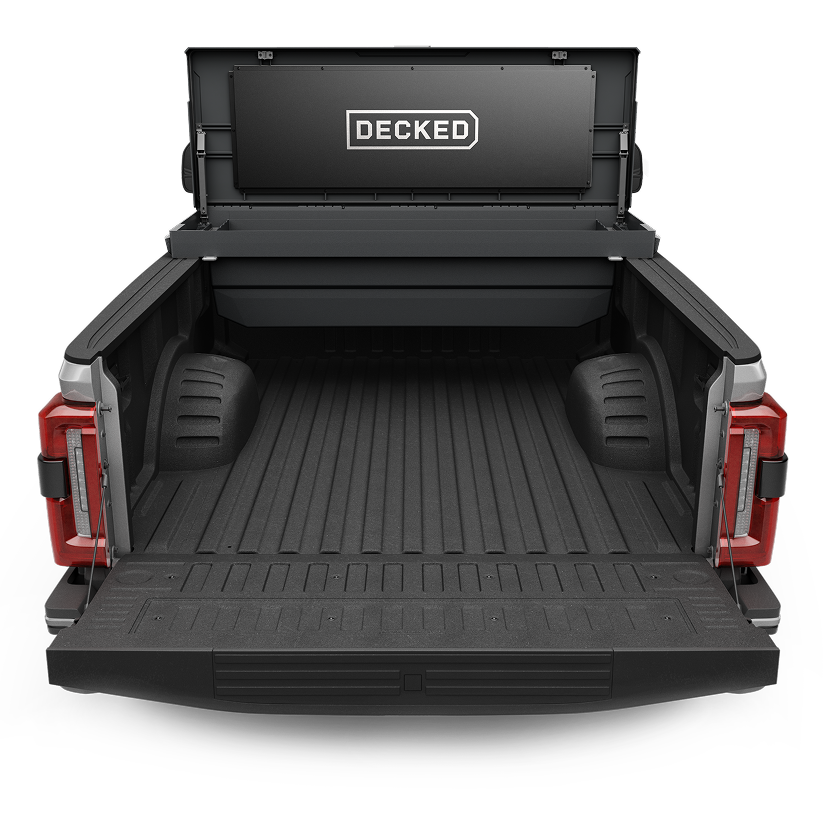
We love a cross-bed toolbox. Obviously — we make the DECKED Tool Box. You get lockable, weatherproof storage up by the cab, you keep full bed depth, you spend less. If your needs are simple and contained, and having an open bed trumps access and organization, it’s a solid pick.
The trouble starts when your loadout overflows. Once it outgrows the box, you’re back to random bins and boxes sliding around the open bed like a buttered otter. When you need to haul items and materials that require the full length of the bed, now you’re hanging an extra couple feet off the tailgate. A tool box also does nothing to keep you from crawling into and jumping out of the bed.
None of these are dealbreakers, or a single reason to go one way or the other. They’re considerations for how you use your truck.
And if you’re pulling a gooseneck or fifth wheel most of the time, the DECKED Tool Box is definitely your move. Your bed is basically a parking spot for a hitch, and we respect that.
See the DECKED Tool Box here.

Stack Your Setup. Win Back Some Utility.
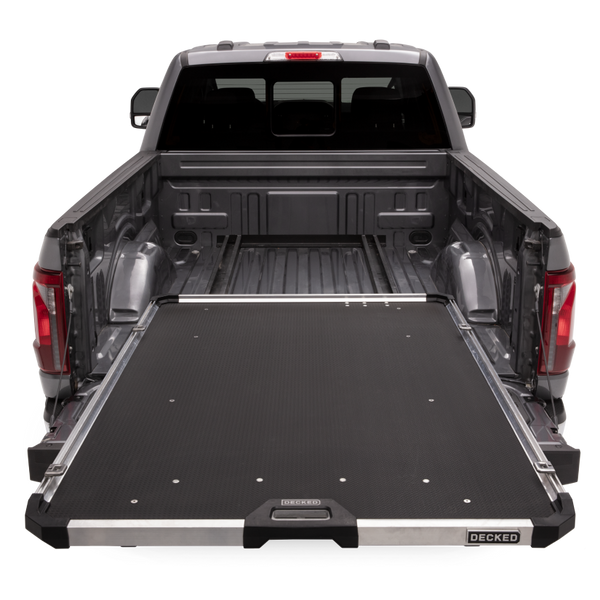
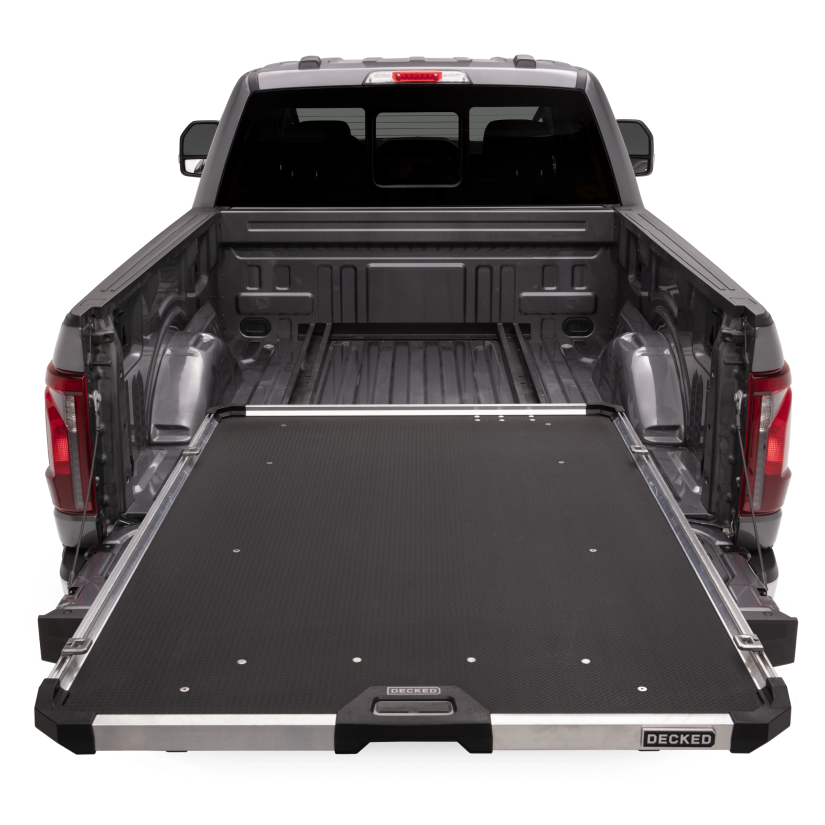
Drawers don’t have to work alone — our options don’t compete as much as you might think. CargoGlide on a Drawer System works. A Tool Box over a CargoGlide works in many cases. Go CargoGlide-only if you need access and nothing else. Got an eight-foot bed and want all three? Hell yeah, have at it. It’s the truck version of a three-car garage, and it’ll fill up just as fast.
If tall loads are your sticking point, a CargoGlide gives you slide-out access to whatever you’re hauling up top.
Check out your options for all three here.


FAQ: Straight Answers.
Is DECKED worth the money?
For most truck owners, yes. You’re paying for organization, lockable weatherproof storage, and a 2,000-lb platform on top. If you live out of your truck or run it double duty for work and weekend, the time you get back pays off fast. If you haul loose bulk and don’t need tool storage, or you tow a fifth wheel or gooseneck most of the time, there are better-fit options.
Is DECKED too heavy?
The range is 164 to 283 lbs for truck Drawer Systems. The System for Ford Maverick (the smallest one we make, other than SUV Systems) weighs 164 lbs. The full-size, 8-foot-bed System with the Load Floor weighs 283 lbs. Subtract that from your door-jamb payload number and you know exactly what you’ve got left. The System still carries 1,000 lbs (midsize trucks) or 2,000 lbs (full-size trucks) on top.
Does DECKED reduce bed space?
Yes and no. It reduces bed depth by 12 inches. It also extends the usable deck over your wheel wells, so you gain surface area while you lose vertical volume.
What are the disadvantages of DECKED?
The DECKED Drawer System costs more than a basic toolbox. It adds weight. It takes 12 inches of bed depth and raises your loading height. You also need room behind the truck to open the drawers.
Who should buy DECKED?
Anyone who hauls big stuff on top and needs organized access underneath, lives out of their truck, runs it for work, weekends, and every season in between, or is tired of moving gear between the bed, cab, and garage. If your bed is mostly hauling loose gravel or serving as home base for a hitch, look at the DECKED Tool Box. If you want full bed access and extra vertical bed space, check out CargoGlide.

Enough Said.
So, is DECKED worth it? If a staged, organized truck sounds better than your current bed, yes.
You’re trading some depth, some weight, and some cash for a truck that’s always ready to go. Not everyone should make that trade, and we’ve told you who shouldn’t. No hard feelings.
If you recognized your own truck somewhere in here, that’s not a coincidence. The tailgate shuffle gets old.