

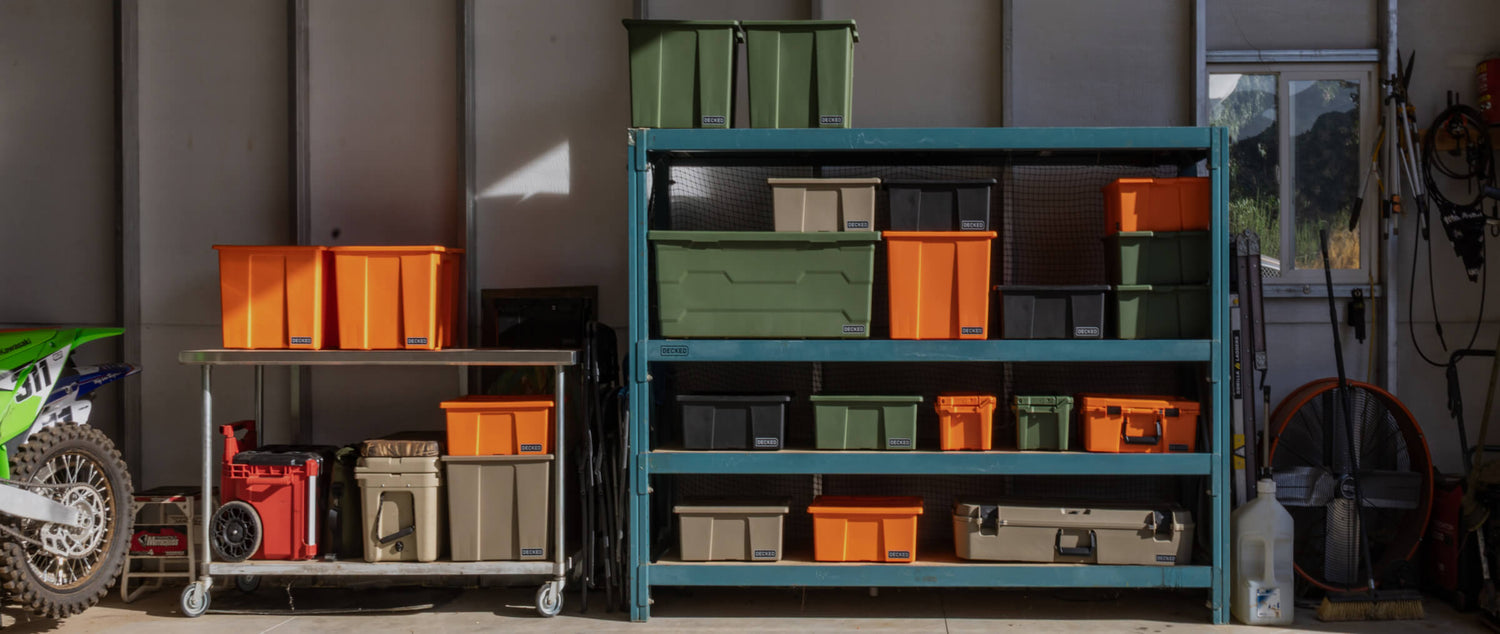
With DECKED Cases + Bins
Stop rearranging deck chairs on the Titanic. Most "garage organization" projects are just moving the same piles of stuff from the floor to a shelf until the shelf sags or the bins crack. It’s a futile game played with shoe boxes, random containers, and brittle plastic bins that crack if you look at them sideways.
If you want a garage that functions like a professional shop rather than a cluttered attic, you need a system built on three pillars: Stability, Mobility, and Logic. Here’s how you build a sleek storage system that’ll become your reason to leave the garage door open.

Vertical Integration
Floor space is your most valuable real estate. If you aren't building up, you’re missing out. Obviously, heavy-duty shelving, either pre-built or DIY, is the way to get there with maximum flexibility—just load your bins and put them where you like for ease of access. But what if you need to keep your floor space flexible? It’s time to start stacking.
The "Tower of Terror" approach with flimsy bins is a hazard, both for gear at risk of being crushed and any innocent bystanders standing too close when the breeze picks up. Even if your stacks are well thought-out, mix-and-match bins are bound to slide around like a buttered otter and aren’t to be trusted. Think of the children.
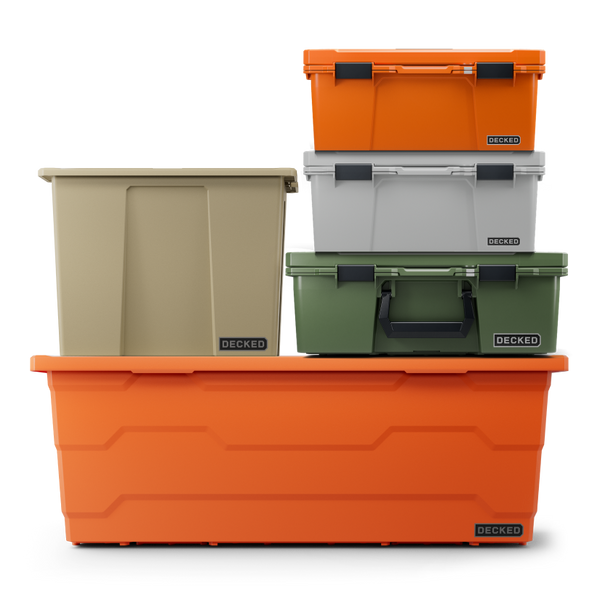
Ordinarily, with cheap bins, smaller containers have to be stacked at the top—they’re more likely to collapse under weight. Stable Stack lid-to-base integration and a 200 lb on-lid weight capacity means Payloaders of all sizes are stackable together and with all other DECKED Cases in whatever order is best for your purposes. This way, you can build your stacks not based on what the bins dictate, but by what you actually need to access more often. You’ll still want to place heavier items at the bottom to keep stacks sturdy, but you aren’t limited to which size bin should go where.

The Grab-and-Go Workflow
A truly great garage system isn't static. It's a staging area. Your tools and gear should move seamlessly from the shelf to the workbench, trailhead, jobsite, campsite—wherever.
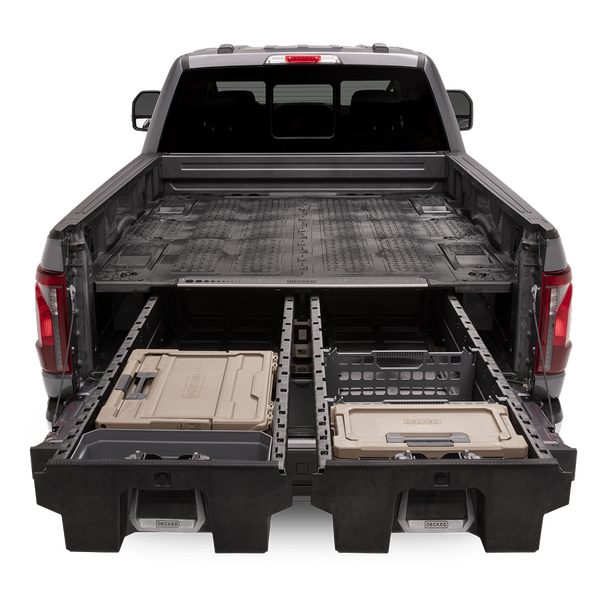
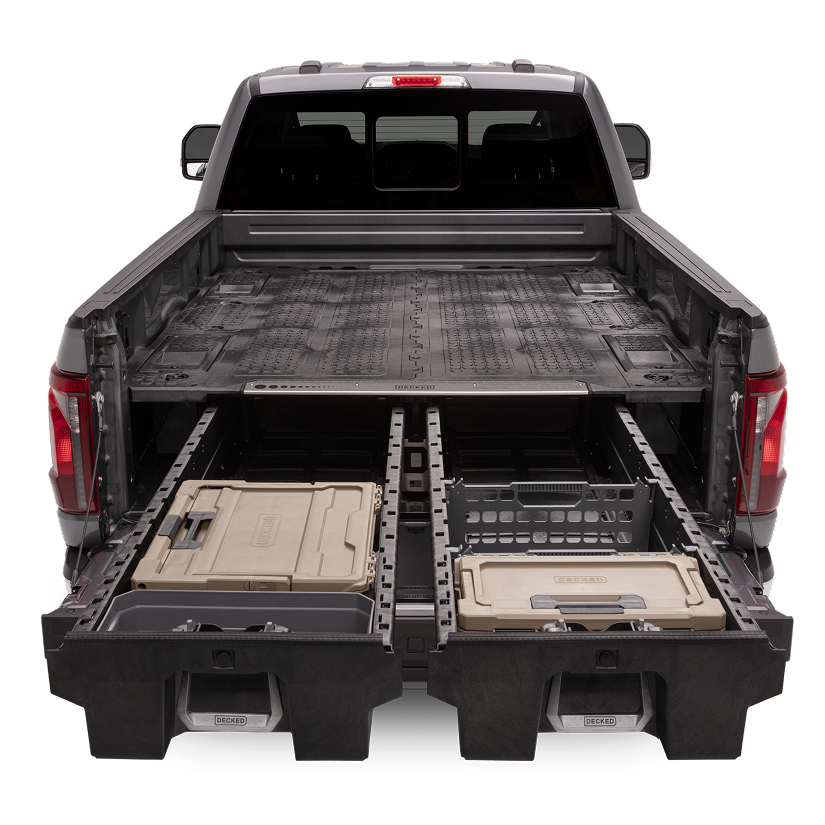
Choose containers that are easy to transport, work well together, and are rugged enough to make the journey. Unless you plan to take up time repacking everything into bags or a separate set of "travel bins" before every outing, your garage storage and your go-bins should be the same thing. Payloaders are sized to fit in and on a Drawer System, slide into the trunk of an SUV, or ride shotgun in a PT Cruiser. When you know ahead of time how everything fits together, you eliminate the repacking phase of your Saturday morning entirely.
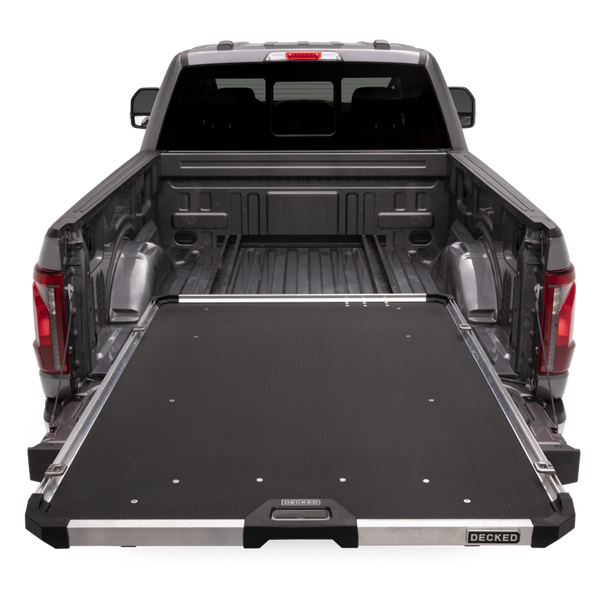
Most bins are completely smooth on the bottom. Fine for a shelf, a problem everywhere else. Your truck bed and trunk become an uninvited slip-n-slide every time you take a corner. All Payloaders feature rubberized grips at all four corners plus a base pattern that interlocks with the Drawer System top deck and all Battle Mats, so your gear stays put whether it's parked in the garage or hauling ass down a dirt road.


Take Time to Make Time
Hunting for a specific wrench or your camping stove shouldn't feel like an archaeological dig. If you have to open six different lids to find your tow straps, your "system" has failed you. The logic is simple: take the time now, save time later. Group by use, then color-code the mission:
- Emergency/Safety (Blaze Orange): First aid, recovery gear, fire extinguishers. If things go sideways, you don't want to be looking for "the grey bin with the Sharpie scribble on the side." You want the orange one. Now.
- Outdoor/Adventure (Ranger Green): Camping stoves, sleeping bags, and that overpriced titanium spork.
- Tools & Hardware (Fender Dirt): Impact drivers, socket sets, and the spare parts you’ll "definitely use one day."
- The Archives (Black): Holiday decorations, old tax returns, or a jumbo supply of foam earplugs.
By grouping items of the same use together and assigning them a permanent color, you train your brain to find what you need at a glance. Slap a label on each bin to call out its specific contents and you’ve shifted the “hunt” for gear into a targeted strike. It’s not just neat. It’s efficient.

Build a Fortress,
Not a Graveyard.
Cheap bins and ramshackle “organization” are where your dreams and time go to die.
A garage storage system is meant to do one thing: work. And that means making your life more efficient so you can get more done and do more of what you love. Investing time, energy, and—yeah—a little money is going to pay off tenfold.
It’s all about finding what works best for your needs and creating a stable, mobile, efficient system to make the most of your time. We think Payloaders are the way to go, but at the end of the day the right move is the one that works best to help you make time to get after it.


